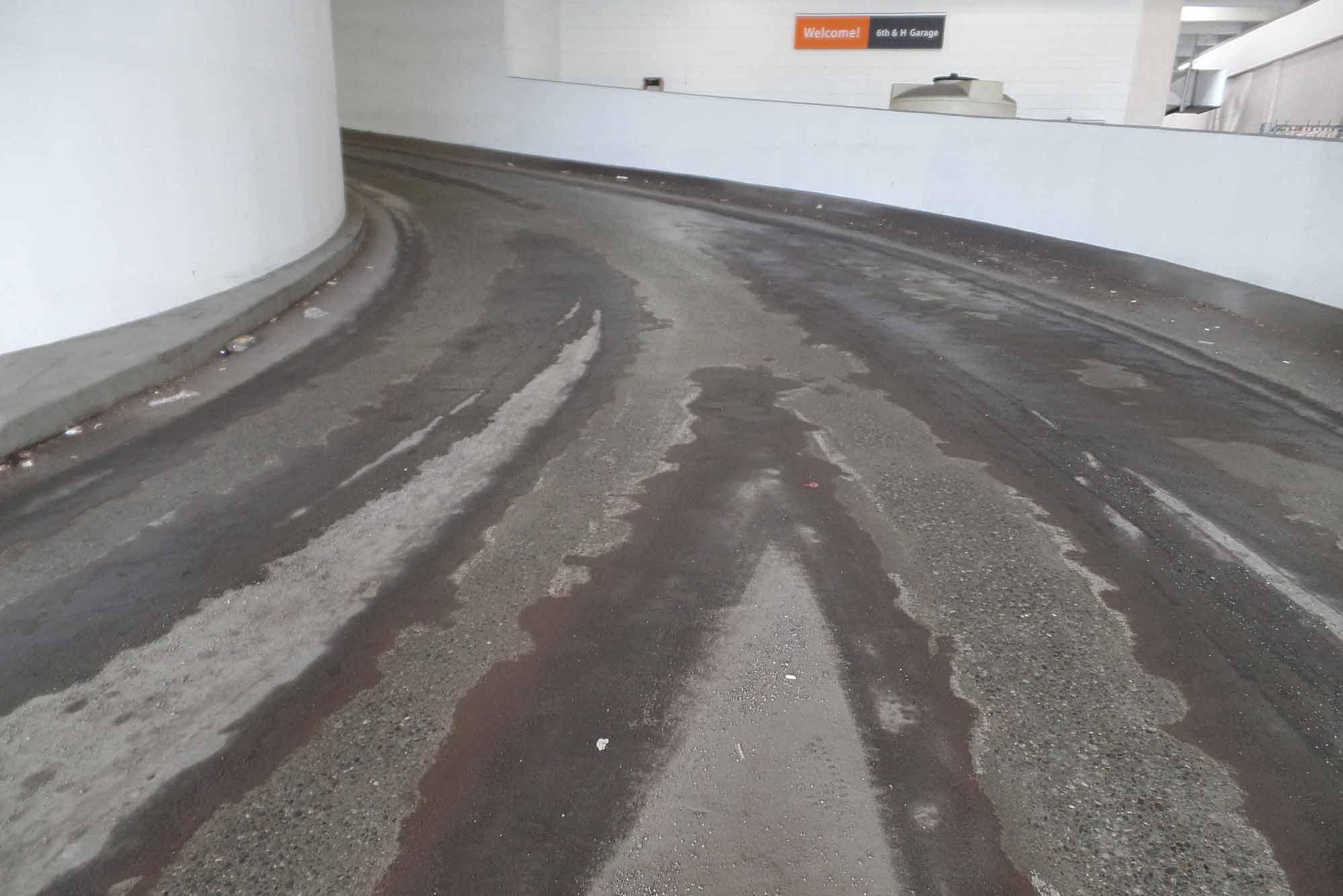
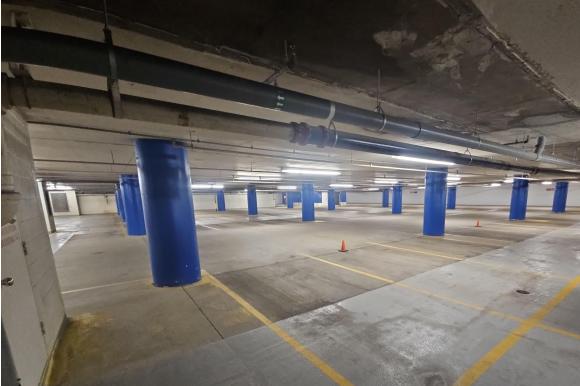
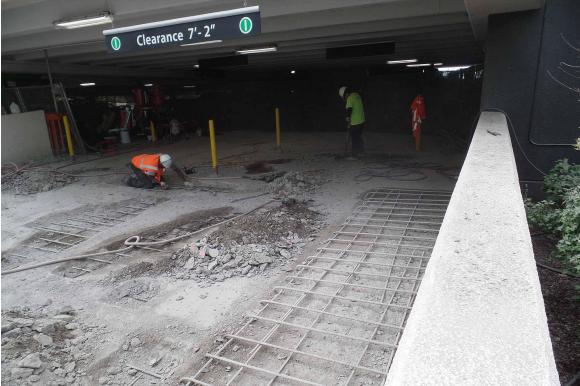
White, powdery deposits on a parking structure may appear to be little more than an aesthetic problem. However, efflorescence can also be an important indication that moisture is moving through the concrete. For facility managers responsible for protecting a parking structure over the long term, understanding where that moisture comes from and how to control it is an important part of preventative maintenance.
At Concrete Masonry Restoration (CMR), we approach efflorescence by looking beyond the visible deposits. Cleaning the surface may improve its appearance, but preventing the condition from returning often requires addressing the moisture that caused it. Professional parking waterproofing, including traffic coating systems and targeted repairs, can help control that moisture while protecting the concrete from more serious deterioration.
Why Does Efflorescence Develop on Parking Structures?
Water Moves Through Concrete
Concrete is porous, which means moisture can migrate through it. As water travels through concrete, it can dissolve naturally occurring soluble salts. When that moisture eventually reaches the surface and evaporates, the salts remain behind as the familiar white or gray deposits known as efflorescence.
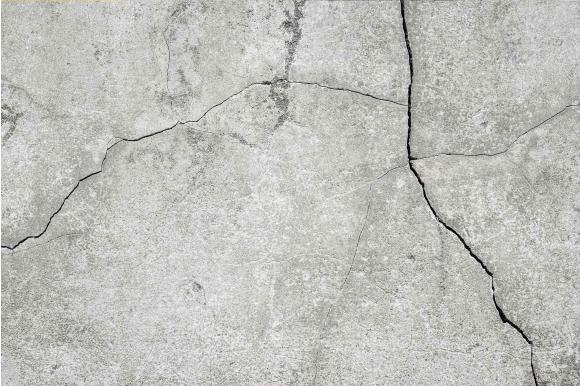
Parking structures provide plenty of opportunities for this process to occur. Rain, melting snow, vehicle-carried moisture, and routine cleaning can all introduce water. Cracks, failed joints, and worn protective systems can then provide pathways deeper into the structure.
We previously covered the condition in greater detail in our article, Efflorescence on Concrete: Causes, Solutions, and Prevention Tips. While cleaning methods can address existing deposits, long-term prevention requires facility managers to consider why water is entering and moving through the concrete in the first place.
Why Facility Managers Should Pay Attention to Efflorescence
The Deposits May Point to a Moisture Problem
Efflorescence itself does not automatically mean that concrete has suffered structural damage. What matters is the moisture movement that allowed the deposits to form.
If water repeatedly penetrates a parking deck, it can carry chlorides from de-icing chemicals into the concrete. Once chlorides and moisture reach embedded reinforcing steel, corrosion can begin. As reinforcement corrodes, it expands and places pressure on the surrounding concrete, eventually contributing to cracking, delamination, and spalling.
For facility managers, recurring efflorescence should therefore be treated as a reason to investigate the condition of the surrounding concrete, joints, drainage, and waterproofing systems rather than simply as a cleaning issue.
How Parking Waterproofing Helps Prevent Efflorescence
Reducing Moisture Infiltration at the Source
Effective parking waterproofing limits the amount of water that can penetrate concrete surfaces. By reducing moisture infiltration, waterproofing also interrupts the process that transports soluble salts to the surface.
The appropriate system depends on the location, condition, and use of the structure. Exposed decks, ramps, pedestrian areas, and lower-level surfaces can experience different types of moisture exposure and may require different solutions.
At CMR, we evaluate the entire system before recommending a repair. Existing cracks, deteriorated concrete, failed expansion joints, and drainage problems may need to be corrected before a waterproofing system can provide the long-term performance the facility needs.
Traffic Coatings Add Protection to Parking Decks
Creating a Barrier Against Water and Chlorides
Traffic coatings are particularly valuable for elevated parking decks because they combine waterproofing protection with the durability required for vehicle traffic. These systems create a protective membrane over the concrete, reducing the ability of water and chloride-laden moisture to penetrate the deck.
This makes traffic coatings an important component of parking waterproofing strategies. Limiting moisture can reduce the conditions that contribute to efflorescence while also protecting embedded reinforcement against chloride-induced corrosion.
Traffic coating systems must also withstand tire traffic, turning forces, temperature changes, and exposure to the elements. Proper surface preparation and installation are therefore essential to achieving lasting results.
Existing Damage Should Be Repaired First
Applying a coating over deteriorated concrete does not correct the underlying problem. Before installing a traffic coating system, we evaluate the substrate and identify areas requiring concrete repair, crack treatment, or joint replacement.
Addressing these conditions first creates a sound surface for the new system and helps prevent water from bypassing the coating through existing defects.
Cracks and Joints Are Critical Waterproofing Details
Even a well-protected deck can develop moisture problems if cracks and expansion joints are neglected. These openings can provide direct pathways for water into and through the structure.
Expansion joints are particularly important because they must remain watertight while accommodating normal building movement. As joint materials age, they can crack, separate, or lose flexibility. Water can then move through the opening and affect concrete on lower levels.
A comprehensive parking waterproofing plan should therefore consider the deck surface, cracks, expansion joints, transitions, and other vulnerable details as interconnected parts of the same moisture-management system.
Preventative Maintenance Can Reduce Long-Term Repair Costs
For facility managers, the best time to address moisture infiltration is before widespread deterioration develops. Routine inspections can identify worn traffic coatings, deteriorated sealants, cracking, recurring efflorescence, and other early warning signs.
Planning repairs at this stage provides greater control over budgets and schedules. It can also help extend the service life of the parking structure by limiting exposure to the water and chlorides responsible for many common forms of concrete deterioration.
Protect Your Parking Structure With CMR
Efflorescence may be what catches your attention, but moisture is often the more important issue to investigate. Cleaning visible deposits without addressing water infiltration can leave the conditions that caused them unchanged.
At Concrete Masonry Restoration, we help facility managers take a more comprehensive approach. From concrete and joint repairs to traffic coatings and parking waterproofing, our team develops restoration strategies designed to control moisture and protect parking structures against long-term deterioration.
If you are noticing recurring efflorescence, leaks, deteriorating coatings, cracks, or other signs of moisture movement in your parking structure, contact CMR to schedule an evaluation. Addressing the source today can help prevent a much larger restoration project tomorrow.